Table of Contents
Introduction: Sleep Is the Ultimate Cellular Recovery System
For decades, sleep was viewed as passive downtime — a simple biological requirement to restore energy. Modern neuroscience and longevity research have completely shattered that misconception, proving that the ultimate way to access peak cellular recovery is to biohack your circadian rhythm for deeper restorative cycles. Deep sleep is not merely rest; it is an active state.
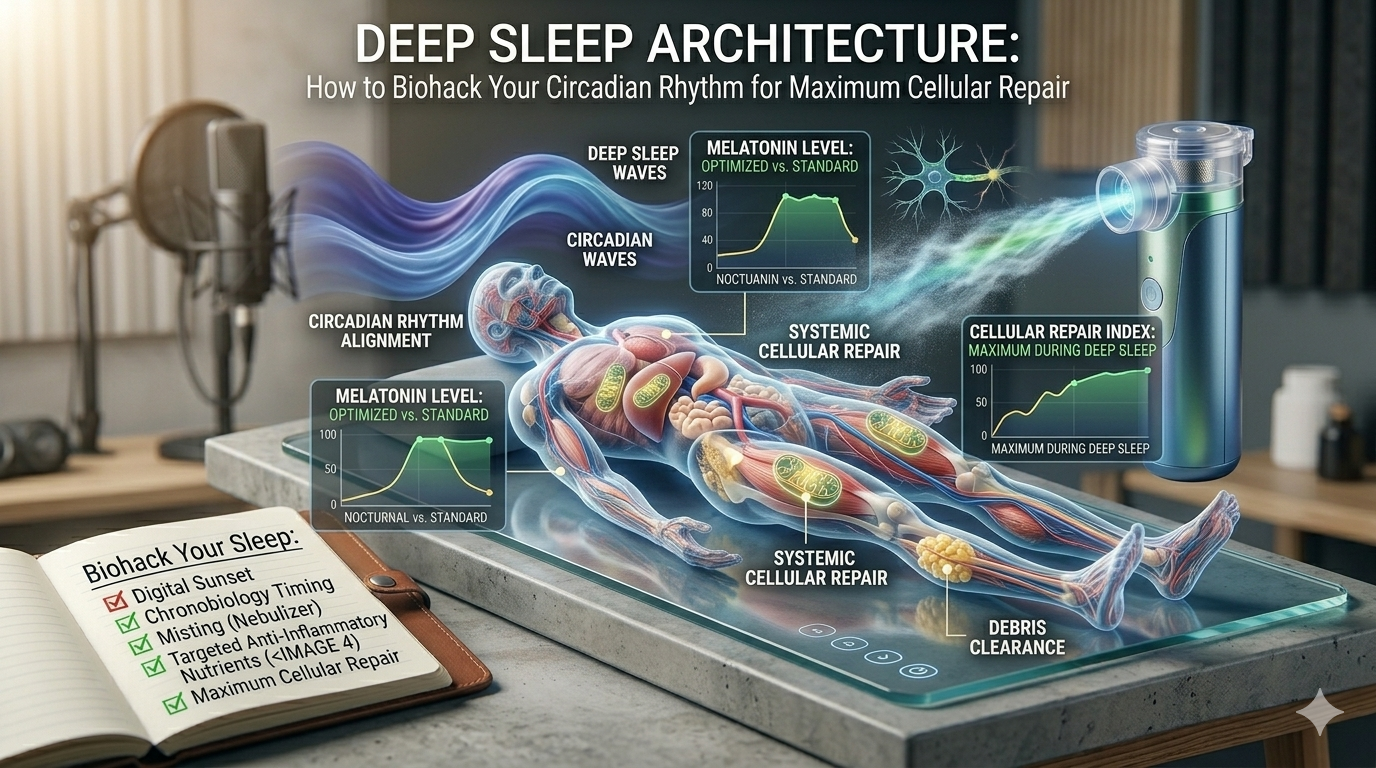
While you sleep, your brain activates complex repair mechanisms that cannot fully occur during waking hours. Neural waste products are cleared through the glymphatic system, damaged tissues undergo repair, hormones rebalance, immune cells regenerate, and mitochondrial recovery accelerates. In many ways, sleep functions as the body’s built-in anti-aging protocol.
The quality of your sleep architecture — especially the amount of deep sleep and properly timed circadian alignment — directly impacts:
- Cellular repair
- Cognitive performance
- Hormonal balance
- Metabolic health
- Inflammation control
- Immune resilience
- Longevity pathways
Biohackers, elite athletes, longevity researchers, and high performers increasingly recognize that optimizing sleep may provide greater health benefits than almost any supplement, wearable, or productivity system.
The reality is simple: you cannot out-supplement poor sleep.
Understanding how circadian biology works — and how environmental factors shape your sleep cycles — is one of the most powerful health upgrades available today.
How to Biohack Your Circadian Rhythm for Sleep
The human body operates on an internal 24-hour timing mechanism known as the circadian rhythm. This biological clock governs nearly every physiological process, including:
- Hormone release
- Body temperature
- Cognitive alertness
- Digestion
- Immune activity
- Cellular repair
- Sleep-wake cycles
At the center of this system is the suprachiasmatic nucleus (SCN), a cluster of neurons located in the hypothalamus. The SCN acts as the master clock, synchronizing your body to external light-dark cycles.
The Cortisol-Melatonin Dance
Two hormones dominate circadian regulation:
Cortisol
Cortisol is often misunderstood as a “stress hormone,” but healthy cortisol rhythms are essential for energy and survival. Cortisol should naturally rise in the morning to increase alertness, focus, and metabolism.
Melatonin
Melatonin is the body’s darkness hormone. As evening approaches and light exposure decreases, melatonin secretion rises, signaling the body to prepare for sleep.
The problem in modern society is circadian disruption.
Artificial lighting, screens, late-night work, irregular sleep schedules, and constant digital stimulation confuse the brain’s timing system. The result is delayed melatonin production, fragmented sleep, reduced deep sleep, and impaired recovery.
Even worse, chronic circadian misalignment has been associated with:
- Increased inflammation
- Accelerated aging
- Insulin resistance
- Obesity
- Mood disorders
- Cardiovascular disease
- Neurodegeneration
“The result is delayed melatonin production, fragmented sleep, and reduced deep sleep. To fix this, you must learn to biohack your circadian rhythm by reducing environmental disruptors before bedtime.”
Why Deep Sleep Matters for Cellular Repair
Sleep consists of multiple stages cycling throughout the night:
- Light sleep (N1 and N2)
- Deep sleep (N3 / slow-wave sleep)
- REM sleep
Deep sleep is particularly critical for physical restoration.
During slow-wave sleep:
- Growth hormone secretion peaks
- Tissue repair accelerates
- Muscle recovery improves
- Immune modulation increases
- Glucose metabolism stabilizes
- Brain detoxification intensifies
One of the most important discoveries in neuroscience is the glymphatic system — the brain’s waste clearance network.
The Brain’s Nightly Detox System
During deep sleep, cerebrospinal fluid flows through brain tissue, removing metabolic waste products such as beta-amyloid and tau proteins. These compounds are strongly associated with neurodegenerative diseases like Alzheimer’s.
Researchers have observed that the glymphatic system becomes dramatically more active during sleep compared to waking states.
In practical terms, deep sleep functions as a neurological cleaning cycle.
Poor sleep quality may therefore contribute not only to fatigue, but also to long-term cognitive decline and accelerated brain aging.
The Sleep Sanctuary: Engineering the Ideal Recovery Environment
The bedroom environment is one of the most overlooked variables in sleep optimization.
Many people focus on supplements while ignoring environmental factors that fundamentally control sleep physiology.
Creating a proper “sleep sanctuary” can significantly increase deep sleep quality and circadian synchronization.
1. Temperature Regulation: Why Cooling the Body Triggers Deep Sleep
Human sleep biology is tightly connected to thermoregulation.
To enter deep sleep efficiently, the body must reduce core temperature. This cooling process is a biological signal that helps initiate melatonin release and sleep onset.
If your sleeping environment is too warm, the body struggles to transition into restorative slow-wave sleep.
Research consistently shows that cooler bedroom temperatures improve:
- Sleep onset latency
- Deep sleep duration
- Sleep efficiency
- Heart rate variability
- Overnight recovery
Ideal Sleep Temperature
Most sleep researchers recommend a bedroom temperature between:
- 60–67°F (15.5–19.5°C)
Biohackers often optimize further through:
- Cooling mattresses
- Breathable bedding
- Temperature-regulating sheets
- Cold showers before bed
- Lower thermostat settings
Practical Temperature Optimization Tips
- Keep the room cool and ventilated
- Avoid heavy blankets if overheating occurs
- Take a warm shower 60–90 minutes before bed (this paradoxically helps the body cool afterward)
- Avoid intense late-night exercise that elevates body temperature excessively
Temperature is one of the strongest environmental triggers for deep sleep initiation.
2. Absolute Blackout: The Hidden Danger of Light Pollution
Modern humans are exposed to unprecedented levels of artificial light.
Even tiny amounts of nighttime light exposure can interfere with melatonin production and circadian signaling.
The retina contains specialized cells that detect light and communicate directly with the brain’s circadian clock. Blue wavelengths are especially disruptive because they mimic daylight.
Common melatonin disruptors include:
- Smartphones
- TVs
- LED lights
- Alarm clocks
- Streetlights
- Laptop screens
- Smart home indicators
Even dim light penetrating the eyelids can affect sleep architecture.
Why Darkness Matters
Complete darkness supports:
- Higher melatonin output
- Faster sleep onset
- More stable REM cycles
- Better hormonal recovery
- Enhanced mitochondrial restoration
Blackout Optimization Checklist
- Use blackout curtains
- Eliminate LED indicators
- Cover electronics
- Remove unnecessary devices from the bedroom
- Use dim amber lighting at night
- Wear a sleep mask if necessary
Your bedroom should ideally resemble a cave-like environment — cool, dark, and quiet.
This is the environment human biology evolved to sleep in.
Blue Light and the Circadian Disruption Crisis
One of the biggest modern threats to sleep quality is artificial blue light exposure at night.
Blue light suppresses melatonin production more aggressively than most other light wavelengths.
Unfortunately, modern devices emit substantial blue-spectrum light.
What Happens When You Use Screens at Night?
Late-night screen exposure can:
- Delay melatonin release
- Increase sleep latency
- Reduce deep sleep
- Suppress REM sleep
- Increase nighttime alertness
- Elevate evening cortisol
This creates a neurological contradiction: the body feels exhausted, but the brain remains chemically stimulated. Over time, failing to biohack your circadian rhythm leads to chronic metabolic fatigue.
Nighttime Performance Protocols for Deep Sleep Optimization
High performers increasingly use structured evening protocols to protect sleep quality.
The goal is to create a physiological transition from “performance mode” into “recovery mode.”
The Two-Hour Blue Light Rule
One of the most effective sleep biohacks is reducing blue light exposure approximately two hours before bedtime.
This helps restore natural melatonin signaling.
Effective Blue Light Reduction Strategies
- Stop using phones and laptops before bed
- Use warm ambient lighting
- Enable night mode filters on devices
- Dim household lighting after sunset
- Avoid bright overhead LEDs
Blue Light Blocking Glasses
Blue light blocking glasses have become increasingly popular among biohackers and shift workers.
High-quality amber or red-tinted lenses can reduce circadian disruption by filtering short-wavelength blue light.
Potential benefits include:
- Faster sleep onset
- Improved melatonin production
- Better deep sleep quality
- Reduced nighttime alertness
While glasses are not a replacement for healthy sleep habits, they can significantly reduce damage from unavoidable evening screen exposure.
Additional Biohacks to Improve Deep Sleep Naturally
Morning Sunlight Exposure
The circadian rhythm is set primarily by morning light.
Getting sunlight exposure within 30–60 minutes of waking helps regulate:
- Cortisol timing
- Melatonin release
- Energy levels
- Sleep consistency
Aim for:
- 10–20 minutes outdoors after waking
- Direct natural light exposure whenever possible
This is one of the simplest and most effective circadian interventions available.
Consistent Sleep-Wake Timing
Your circadian system thrives on predictability.
Going to bed and waking up at inconsistent times creates internal “jet lag,” even without travel.
Consistency improves:
- Sleep efficiency
- Hormonal synchronization
- Deep sleep stability
- Morning alertness
When you biohack your circadian rhythm with predictable schedules, even weekends should remain relatively aligned.”
Avoid Late-Night Heavy Meals
Eating large meals close to bedtime may impair sleep quality by elevating body temperature and digestive activity.
For better deep sleep:
- Finish heavy meals 2–3 hours before bed
- Reduce alcohol intake at night
- Limit excessive sugar consumption late in the evening
Alcohol in particular may help induce sleep initially but often fragments REM and deep sleep later in the night.
Magnesium and Nervous System Relaxation
Magnesium plays an important role in nervous system regulation and muscle relaxation.
Some individuals may benefit from magnesium glycinate or advanced deep sleep supplements in the evening as part of a broader circadian strategy.
Magnesium may help support:
- Relaxation
- Sleep onset
- Stress reduction
- Parasympathetic activation
However, supplements should complement — not replace — circadian optimization and environmental control.
The Longevity Connection: Why Sleep Is an Anti-Aging Mechanism
Deep sleep is increasingly recognized as one of the central pillars of longevity medicine.
Poor sleep has been linked to:
- Accelerated biological aging
- Chronic inflammation
- Reduced insulin sensitivity
- Hormonal dysfunction
- Cognitive decline
- Increased mortality risk
Meanwhile, high-quality sleep supports:
- DNA repair
- Cellular autophagy
- Mitochondrial efficiency
- Hormonal resilience
- Neuroplasticity
- Immune optimization
In many ways, sleep quality may be a more important longevity predictor than exercise volume alone.
You can think of deep sleep as the body’s nightly repair window — a period when biological maintenance crews restore, recycle, detoxify, and rebuild.
Conclusion: Sleep Is the Most Powerful Free Biohack
In the modern productivity-driven world, sleep is often sacrificed in pursuit of success. Ironically, chronic sleep deprivation undermines nearly every biological system required for high performance, resilience, and longevity.
Deep sleep is not passive inactivity.
It is an active state of cellular reconstruction, neurological detoxification, hormonal recalibration, and mitochondrial recovery.
Optimizing your circadian rhythm through environmental control, temperature regulation, light management, and structured nighttime protocols may dramatically improve both short-term performance and long-term health outcomes.
The most advanced biohackers increasingly understand a simple truth:
The foundation of human optimization is not found in exotic supplements or expensive technology.
It begins with mastering sleep.
Because when deep sleep improves, nearly everything else improves with it.
4 comentários em “Deep Sleep Architecture: How to Biohack Your Circadian Rhythm for Maximum Cellular Repair”