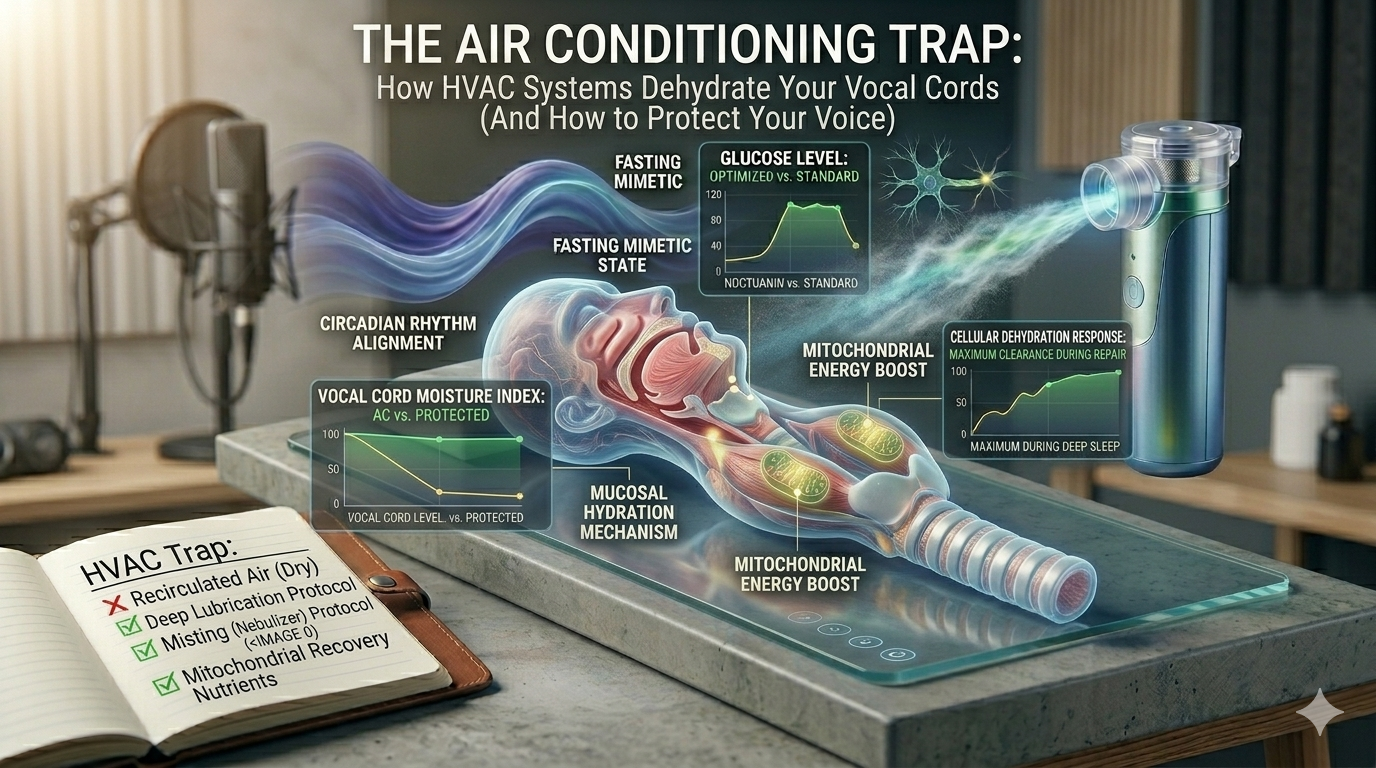
In today’s corporate and entertainment environments, climate-controlled air has become unavoidable. From open-plan offices to podcast studios, understanding how modern hvac vocal cords impact performance is essential, as professionals spend countless hours inside artificially conditioned spaces powered by these drying systems.
While heating, ventilation, and air conditioning systems improve comfort and productivity, they also create a hidden occupational hazard: chronically dry air.
For professionals who rely on their voices — executives, teachers, broadcasters, customer service agents, singers, speakers, content creators, and performers — the consequences can be significant. Persistent throat dryness, frequent throat clearing, vocal fatigue, hoarseness, and irritation are increasingly common complaints in heavily air-conditioned environments.
The problem is not simply “talking too much.” In many cases, the real issue is environmental dehydration of the vocal tract.
This is the air conditioning trap: modern indoor environments silently strip moisture from the respiratory system, forcing the hvac vocal cords connection to function under dry, high-friction conditions for hours at a time.
Understanding how HVAC systems affect vocal health is the first step toward protecting your voice long-term.
Table of Contents
The Modern Workplace Paradox: Comfort Systems That Dry Out the Human Voice
Most commercial HVAC systems are designed to regulate temperature efficiently — not to preserve optimal humidity for the human airway.
In the United States, indoor environments are commonly maintained with low relative humidity, especially during:
- Winter heating seasons
- Aggressive summer air conditioning
- Continuous office ventilation
- Studio environments with sound-sensitive airflow control
- Airplane travel and hotel conference venues
Many indoor spaces operate with humidity levels well below the range considered ideal for vocal health.
For the vocal system, this matters tremendously.
The upper airway — including the nose, throat, and vocal folds — depends on a thin layer of surface moisture to function properly. This protective hydration layer allows the vocal cords to vibrate smoothly during speech and singing.
When HVAC systems continuously circulate dry air, that moisture evaporates faster than the body can naturally replenish it.
The result is subtle but progressive dehydration of the vocal mechanism.
Professionals often notice symptoms such as:
- A scratchy or dry throat during the workday
- Increased need to clear the throat
- Vocal fatigue after meetings or presentations
- Hoarseness by evening
- Difficulty sustaining vocal clarity
- Morning dryness after sleeping with air conditioning
- A sensation of mucus “stuck” in the throat
Unfortunately, many people normalize these symptoms instead of recognizing them as early signs of vocal strain caused by environmental dryness.
The Science Behind HVAC Vocal Cords Dehydration
To understand why dry air affects the voice so aggressively, it helps to understand how the vocal folds work.
The vocal cords are delicate layers of tissue covered by a microscopic lubricating surface known as the mucosal layer. During speaking or singing, the vocal folds collide hundreds of times per second.
Healthy vibration requires adequate surface hydration.
When the airway becomes dry:
- The mucus layer thickens
- Surface lubrication decreases
- Friction between the vocal folds increases
- Greater muscular effort is required to speak
- Tissue irritation develops more easily
This increased friction is one of the main reasons people experience hoarseness and vocal fatigue in air-conditioned spaces.
Low humidity also affects mucus viscosity. Instead of remaining thin and protective, mucus becomes sticky and difficult to clear. This creates the classic sensation that something is “caught” in the throat.
That sensation often triggers throat clearing.
However, throat clearing itself creates another problem.
Why Constant Throat Clearing Makes Things Worse
Many professionals trapped in dry HVAC environments develop chronic throat clearing habits without realizing the damage it can cause.
Throat clearing may provide temporary relief, but mechanically it behaves like a minor form of vocal trauma.
Each forceful clearing action slams the vocal folds together with considerable pressure.
Repeated throughout the day, this cycle can lead to:
- Increased inflammation
- Swelling of the vocal folds
- Persistent irritation
- Worsening mucus production
- Greater vocal fatigue
- Chronic hoarseness
This creates a self-perpetuating cycle where hvac vocal cords irritation triggers immediate throat clearing, leading to further mucosal inflammation and persistent environmental strain.
For professional voice users, this cycle can gradually reduce vocal endurance and clarity over time.
Why Drinking Water Alone Is Not Enough
One of the biggest misconceptions about vocal health is the belief that simply drinking more water immediately hydrates the vocal cords.
Systemic hydration absolutely matters, but its effects are indirect and delayed.
When you drink water, it does not travel directly over the vocal folds. Instead, the body absorbs and distributes that fluid through the bloodstream and tissues over time.
This means:
- Hydration benefits are gradual
- Dry vocal surfaces may remain irritated for hours
- Environmental moisture loss can continue faster than replacement
- A dehydrating environment may overpower normal hydration habits
Someone working eight hours inside aggressively air-conditioned airflow may still experience vocal dryness despite drinking adequate water throughout the day.
This is why many speakers, broadcasters, and performers say:
“I drink water constantly, but my throat still feels dry.”
The issue is often topical dehydration caused by environmental exposure.
That distinction is critical.
Systemic hydration supports the body globally, but the airway may still need direct moisture support at the surface level.
Environmental and Topical Protection Protocol for HVAC-Exposed Professionals
Professionals who spend long hours in climate-controlled spaces need a more comprehensive strategy than hydration alone.
The most effective approach combines:
- Environmental humidity control
- Behavioral vocal care
- Direct topical airway hydration
Below are evidence-informed strategies commonly recommended in voice care and respiratory support settings.
Control Local Humidity Whenever Possible
The first line of defense against HVAC-related vocal dryness is improving ambient humidity.
Indoor humidity levels that are too low accelerate moisture evaporation from the airway.
Using a room humidifier can significantly reduce this drying effect, particularly in:
- Home offices
- Podcast studios
- Recording booths
- Bedrooms
- Conference rooms
- Editing suites
- Streaming setups
Best Practices for Humidity Control
- Aim for indoor relative humidity between 40% and 60%
- Use a hygrometer to monitor room humidity
- Avoid excessive humidity, which may promote mold growth
- Clean humidifiers regularly to prevent contamination
- Position humidifiers near — but not directly blowing at — the workspace
This simple intervention can noticeably reduce throat irritation and vocal fatigue.
Professionals who sleep with air conditioning running overnight may benefit especially from nighttime humidification.
Morning hoarseness is frequently associated with overnight airway dehydration.
Use Ultrasonic Mesh Nebulizers for Direct Airway Hydration
One of the most effective topical strategies for combating HVAC-related dryness is the use of ultrasonic mesh nebulizers with sterile saline solution.
Unlike steam inhalation, modern mesh nebulizers create a fine mist capable of directly hydrating the upper airway surfaces.
This provides immediate moisture support where dry air causes the most irritation.
How Ultrasonic Mesh Nebulizers Help
Nebulized saline may help:
- Rehydrate irritated airway tissues
- Thin thick mucus secretions
- Reduce dryness sensations
- Improve vocal comfort
- Decrease the urge to clear the throat
- Support smoother vocal fold vibration
For professional voice users, this can be especially valuable before:
- Long meetings
- Recording sessions
- Live presentations
- Singing performances
- Public speaking events
- Extended teaching blocks
Why Mesh Nebulizers Are Preferred
Ultrasonic mesh nebulizers are often favored because they are:
- Quiet
- Portable
- Efficient
- Easy to travel with
- Gentle on sensitive airways
Many professionals keep compact units at their desks, in studio environments, or inside travel bags for quick hydration sessions during the workday.
Important Safety Considerations
When using nebulizers:
- Use sterile saline only unless medically directed otherwise
- Clean the device according to manufacturer guidelines
- Avoid sharing devices between individuals
- Consult a healthcare professional if symptoms persist
Nebulized hydration is not a replacement for medical treatment, but it can be a highly effective environmental support strategy for people exposed to chronic dry air.
Additional Voice Protection Habits for Climate-Controlled Environments
Beyond humidity control and topical hydration, several small habits can dramatically improve vocal resilience.
Reduce Unnecessary Vocal Strain
Avoid:
- Speaking loudly over background noise
- Extended phone calls without breaks
- Whispering excessively
- Continuous speaking without pauses
Even mild vocal overuse becomes more damaging in dry conditions.
Replace Throat Clearing With Safer Alternatives
Instead of forceful throat clearing, try:
- Small sips of water
- Gentle swallowing
- Silent coughing
- Nasal breathing
- Brief saline nebulization sessions
Reducing mechanical trauma helps break the inflammation cycle.
Prioritize Nasal Breathing
The nose naturally humidifies and filters incoming air.
Mouth breathing bypasses this protective mechanism and accelerates airway drying.
This is especially important in offices and studios with strong airflow circulation.
Monitor Caffeine and Alcohol Intake
Both can contribute to dehydration effects in susceptible individuals, particularly when combined with dry indoor air exposure. To mitigate these environmental effects, high-performers utilize targeted anti-inflammatory dietary supplements to protect mucosal tissue from the inside out.
A Practical Daily Voice Protection Routine for Office and Studio Professionals
For professionals exposed to HVAC systems daily, consistency matters more than extreme interventions.
A practical vocal protection routine may include:
Morning
- Drink water upon waking
- Use a humidifier overnight if sleeping with AC
- Perform gentle vocal warm-ups before intensive voice use
During Work Hours
- Maintain regular hydration
- Take brief vocal breaks every hour
- Avoid habitual throat clearing
- Use a desktop humidifier when possible
- Use saline nebulization before long speaking demands
Evening
- Reduce unnecessary voice use after heavy vocal days
- Continue hydration
- Use nebulized saline if dryness persists
- Sleep in a humidity-controlled environment
These habits can significantly improve vocal endurance. Protecting your hvac vocal cords health over time requires a strategic balance between indoor temperature comfort and targeted tissue rehydration.
Final Thoughts on HVAC Vocal Cords Protection
Modern professionals cannot realistically avoid air-conditioned environments. HVAC systems are deeply integrated into American workplaces, studios, event venues, hotels, and transportation systems.
The goal is not to eliminate climate control.
The goal is to understand its physiological impact and proactively protect the airway from chronic dryness.
For anyone whose career depends on vocal clarity, stamina, and comfort, environmental hydration should be viewed as part of occupational health — not merely comfort.
The combination of:
- Proper systemic hydration
- Humidity management
- Reduced throat clearing
- Topical airway hydration with ultrasonic mesh nebulizers
- Smart vocal habits
can dramatically reduce the harmful effects of dry indoor air.
Your voice functions best in a hydrated environment. Unfortunately, many HVAC systems create the exact opposite.
Recognizing the problem early — and implementing protective strategies consistently — may help preserve vocal performance, reduce irritation, and support long-term vocal health in today’s climate-controlled world.
1 comentário em “The Air Conditioning Trap: How HVAC Systems Dehydrate Your Vocal Cords (And How to Protect Your Voice)”