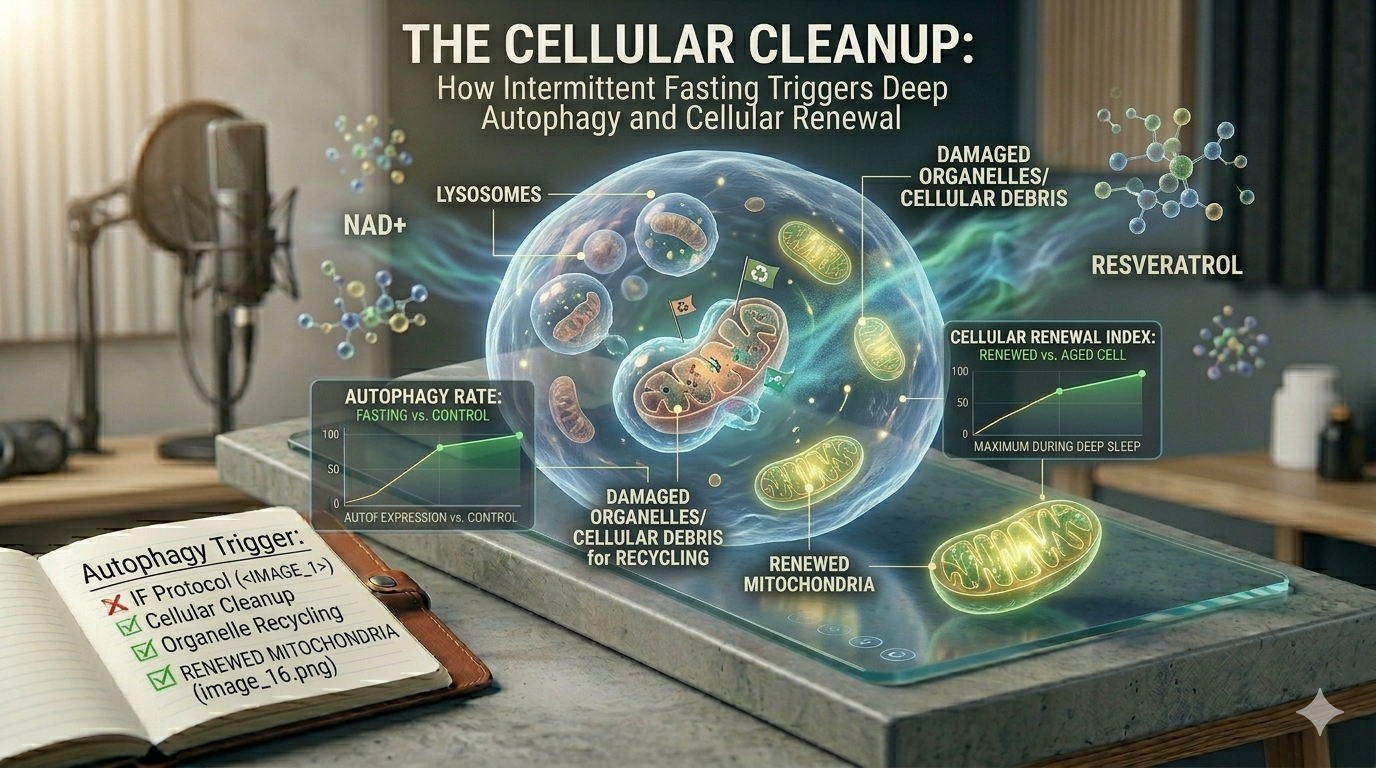
Introduction: Your Body’s Built-In Cellular Recycling System
Imagine having an internal maintenance crew working around the clock to identify damaged components, remove cellular waste, and recycle old materials into new building blocks. This process exists inside your body, and it’s called autophagy.
Derived from the Greek words meaning “self-eating,” autophagy is one of the most fascinating biological mechanisms ever discovered. It allows cells to break down dysfunctional proteins, worn-out organelles, and other cellular debris, converting them into usable energy and raw materials.
The importance of this process became globally recognized in 2016 when Japanese cell biologist Yoshinori Ohsumi received the Nobel Prize in Physiology or Medicine for his groundbreaking research on the mechanisms of autophagy. His work revealed how crucial cellular recycling is for maintaining health, slowing aging, and protecting against disease.
Today, scientists studying longevity, metabolic health, and biohacking consider autophagy one of the most powerful natural repair systems available to the human body. While exercise, sleep, and certain dietary compounds may support it, one strategy consistently stands out for its ability to activate deeper levels of autophagy:
Strategic fasting.
By temporarily withholding food, the body shifts away from growth and digestion and enters a repair-focused state. During this transition, cellular cleanup accelerates, helping the body remove damaged components that may otherwise contribute to aging and chronic disease.
Let’s explore exactly what happens during a fast and how you can safely leverage this biological phenomenon for long-term health.
The Autophagy Timeline: What Happens During a Fast?
Autophagy is not an on-off switch. It operates continuously at low levels, but fasting can significantly enhance the process over time.
The longer your body remains without incoming calories, the more it begins prioritizing maintenance and repair.
After 12 Hours: The Metabolic Shift Begins
Around the 12-hour mark, several important metabolic changes begin to occur:
- Insulin levels start to decline.
- Blood sugar stabilizes.
- Liver glycogen stores begin to decrease.
- Fat burning gradually increases.
- Cellular stress-response pathways become more active.
At this stage, autophagy is beginning to increase, although not yet at its peak. Think of this period as the body preparing for deeper cellular housekeeping.
Many people unknowingly reach this threshold overnight. For example, finishing dinner at 7 p.m. and eating breakfast at 7 a.m. already creates a 12-hour fasting window.
After 16 Hours: Autophagy Gains Momentum
By 16 hours, the body is becoming increasingly reliant on stored energy.
Key changes include:
- Lower insulin levels.
- Increased fat oxidation.
- Higher production of ketones.
- Activation of cellular repair pathways.
- More pronounced autophagic activity.
This is one reason the popular 16:8 intermittent fasting protocol has gained widespread attention among health-conscious individuals and longevity researchers.
During this phase, cells become more efficient at identifying and removing dysfunctional proteins and damaged cellular structures.
Many people also report:
- Increased mental clarity
- More stable energy levels
- Reduced cravings
- Improved focus
These effects are partly related to improved metabolic flexibility and rising ketone production.
After 24 Hours: Deep Cellular Cleanup
At approximately 24 hours, the body enters a significantly deeper fasting state.
During this period:
- Glycogen stores become substantially depleted.
- Growth signaling pathways are suppressed.
- Cellular repair mechanisms intensify.
- Fat metabolism increases significantly.
- Autophagy becomes much more robust.
Researchers believe this is where some of the most profound cellular cleanup activities begin to occur.
The body starts aggressively removing:
- Damaged proteins
- Dysfunctional mitochondria
- Cellular debris
- Potentially harmful protein aggregates
This deep maintenance mode may contribute to improved resilience against age-related decline and chronic metabolic dysfunction.
While longer fasts may further amplify these effects, they should be approached cautiously and ideally under professional guidance.
Longevity Perks: Why Autophagy Matters Beyond Weight Loss
Many people initially discover fasting as a weight-management tool. However, the most exciting benefits may have little to do with the number on the scale.
Autophagy influences some of the most important biological processes involved in healthy aging.
Reduced Systemic Inflammation
Chronic low-grade inflammation has become a hallmark of modern disease.
It is associated with:
- Cardiovascular disease
- Type 2 diabetes
- Arthritis
- Neurodegeneration
- Accelerated aging
Autophagy helps eliminate damaged cellular components that can trigger inflammatory responses.
By reducing the accumulation of cellular waste, fasting may support a healthier inflammatory balance throughout the body.
Many longevity researchers view this reduction in chronic inflammation as one of the key mechanisms behind fasting’s health benefits.
Improved Insulin Sensitivity
Modern diets often keep insulin elevated for most of the day.
Over time, this can contribute to insulin resistance, a major driver of metabolic disease.
Strategic fasting creates extended periods of low insulin exposure, allowing cells to become more responsive to insulin once food is reintroduced.
Potential benefits include:
- Better blood sugar regulation
- Reduced metabolic stress
- Improved fat utilization
- Lower risk of type 2 diabetes
- Enhanced energy management
Improved insulin sensitivity is consistently associated with better long-term health outcomes and increased longevity.
Brain Protection and Cognitive Resilience
The brain appears to benefit significantly from fasting-induced autophagy.
Emerging research suggests that cellular cleanup processes may help remove damaged proteins that accumulate with age and contribute to cognitive decline.
Fasting may also support:
- Increased production of brain-derived neurotrophic factor (BDNF)
- Enhanced neuronal resilience
- Improved mitochondrial efficiency
- Better stress adaptation
Some researchers believe that periodic activation of autophagy may play a protective role against age-related neurodegenerative conditions.
While fasting is not a cure or treatment for neurological diseases, maintaining efficient cellular housekeeping may support healthier brain aging over the long term.
The Beginner to Advanced Protocols
The good news is that you don’t need extreme fasting schedules to begin supporting autophagy.
Several practical protocols have become popular in the United States due to their sustainability and effectiveness.
The 16:8 Protocol
The 16:8 method is often considered the ideal starting point.
The structure is simple:
- Fast for 16 hours.
- Eat within an 8-hour window.
A common example:
- First meal: 12:00 p.m.
- Last meal: 8:00 p.m.
Benefits include:
- Easy implementation
- Improved adherence
- Increased fat utilization
- Lower insulin exposure
- Gradual activation of autophagy
For beginners, this protocol offers a manageable introduction to fasting without requiring full-day fasts.
Tips for Success
- Stay hydrated.
- Prioritize protein intake.
- Eat nutrient-dense meals.
- Maintain consistent fasting windows.
- Avoid overeating during feeding periods.
Consistency matters more than perfection.
Early Time-Restricted Feeding (eTRF)
Among longevity researchers, Early Time-Restricted Feeding has generated significant interest.
Instead of eating late into the evening, food intake is shifted earlier in the day.
Example schedule:
- First meal: 8:00 a.m.
- Last meal: 4:00 p.m.
This approach aligns more closely with the body’s circadian rhythms.
Potential advantages include:
- Better glucose control
- Improved insulin sensitivity
- Enhanced metabolic efficiency
- Better sleep quality
- Longer overnight fasting periods
Research suggests that eating earlier may provide unique metabolic benefits beyond simply reducing calories.
For individuals seeking a more advanced fasting strategy, eTRF represents a compelling option.
What Actually Breaks Your Fast?
One of the most common sources of confusion is understanding what truly interrupts the fasting state.
While definitions vary depending on goals, the following guidelines are useful for individuals pursuing autophagy and metabolic benefits.
Likely to Break a Fast
- Sugar
- Honey
- Fruit juice
- Protein powders
- Amino acid supplements
- Creamers
- Milk
- Bulletproof coffee with butter or MCT oil
- Caloric beverages
These items stimulate digestive and metabolic pathways that can reduce or interrupt fasting-related benefits.
Gray Area Items
Some products may have varying effects depending on the individual and the amount consumed:
- Artificial sweeteners
- Zero-calorie flavored beverages
- Sugar-free gum
Although calorie-free, some sweeteners may stimulate insulin responses or increase hunger in certain individuals.
Generally Considered Fasting-Friendly
- Water
- Sparkling water
- Black coffee
- Unsweetened tea
- Electrolytes without calories
These options help maintain hydration while preserving the fasting state for most people.
What About Supplements?
Many supplements technically interrupt a strict fast.
Examples include:
- Fish oil
- Protein supplements
- Branched-chain amino acids (BCAAs)
- Collagen peptides
If maximizing autophagy is your primary goal, these are typically best consumed during your eating window.
Conclusion: Small Fasting Habits Can Create Powerful Cellular Changes
Autophagy represents one of the body’s most remarkable self-renewal mechanisms. Through the strategic use of fasting, you can encourage your cells to remove damaged components, recycle valuable materials, and operate more efficiently.
The benefits extend far beyond weight loss. Reduced inflammation, improved insulin sensitivity, enhanced metabolic flexibility, and potential protection against age-related decline all make fasting an attractive tool for long-term health optimization.
The key is to start conservatively.
Begin with a simple 12-hour overnight fast. Gradually progress to a 16:8 schedule if it feels sustainable. As your body adapts, you can explore more advanced approaches such as Early Time-Restricted Feeding.
Longevity is rarely the result of a single dramatic intervention. Instead, it emerges from consistent habits practiced over years and decades.
By giving your body regular opportunities to activate its natural cellular cleanup system, you may be investing in healthier aging, stronger metabolic function, and greater vitality for the future.