Introduction: The Hidden Threat of Cellular Senescence
Modern longevity science has dramatically changed how researchers view aging. Aging is no longer seen as merely the passive wear and tear of time. Instead, scientists now recognize that aging is deeply connected to specific biological mechanisms occurring inside every cell of the human body.
One of the most important of these mechanisms is cellular senescence.
Senescent cells are often called “zombie cells” because they no longer function properly, yet they refuse to die. These damaged cells stop dividing, but instead of being cleared away naturally, they remain metabolically active and release inflammatory compounds known as the Senescence-Associated Secretory Phenotype (SASP).
Over time, the accumulation of these dysfunctional cells contributes to:
- Chronic low-grade inflammation
- Accelerated tissue aging
- Reduced mitochondrial efficiency
- Declining immune function
- Joint degeneration
- Skin aging
- Cardiovascular dysfunction
- Cognitive decline
This process has become a major target in anti-aging medicine and longevity research.
To combat cellular aging, scientists have increasingly focused on naturally occurring polyphenols—plant-derived compounds with powerful antioxidant and signaling effects. Among the most researched are Resveratrol and Quercetin, two molecules that work synergistically to support cellular resilience, mitochondrial function, and healthy aging pathways.
Together, they form what many longevity experts consider one of the most promising nutritional combinations for promoting lifespan and healthspan at the molecular level.
Resveratrol: The Sirtuin Activator
What Is Resveratrol?
Resveratrol is a naturally occurring polyphenol found in:
- Red grapes
- Japanese knotweed
- Blueberries
- Peanuts
- Red wine
It became globally famous after scientists discovered its potential role in the “French Paradox”—the observation that French populations consuming high-fat diets still exhibited relatively low rates of cardiovascular disease.
However, the true scientific excitement around resveratrol emerged when researchers discovered its relationship with sirtuins.
The Longevity Genes: Understanding Sirtuins
Sirtuins are a family of proteins often referred to as “longevity genes.”
These proteins regulate critical biological functions, including:
- DNA repair
- Cellular stress resistance
- Mitochondrial biogenesis
- Inflammation control
- Metabolic efficiency
- Autophagy
- Circadian rhythm regulation
Among them, SIRT1 is particularly important in anti-aging research.
Resveratrol is believed to activate SIRT1 pathways, mimicking many of the biological effects associated with caloric restriction—one of the most well-documented interventions for extending lifespan in laboratory models.
How Resveratrol Mimics Caloric Restriction
When calorie intake is moderately reduced, the body activates survival pathways that enhance cellular repair and metabolic efficiency. Resveratrol appears to stimulate similar molecular signaling without requiring severe dietary restriction.
This phenomenon is often referred to as a caloric restriction mimetic.
The result may include:
- Improved mitochondrial performance
- Enhanced fat metabolism
- Reduced oxidative stress
- Better insulin sensitivity
- Increased cellular stress tolerance
At the mitochondrial level, resveratrol helps support ATP production efficiency while reducing the formation of damaging reactive oxygen species (ROS).
Mitochondrial Protection and Energy Production
Mitochondria are the energy-producing organelles inside cells. As humans age, mitochondrial efficiency declines, leading to:
- Fatigue
- Reduced metabolic flexibility
- Muscle weakness
- Cognitive slowing
- Accelerated aging
Resveratrol supports mitochondrial health by stimulating pathways involving:
- AMPK (AMP-activated protein kinase)
- PGC-1α (mitochondrial biogenesis regulator)
- SIRT1 activation
These pathways collectively encourage the formation of healthier mitochondria and improve energy metabolism.
Some researchers even describe resveratrol as a “metabolic reprogramming compound” because of its ability to influence how cells produce and utilize energy.
Anti-Inflammatory and Cardiovascular Benefits
Another key aspect of resveratrol is its anti-inflammatory effect.
Chronic inflammation—often called inflammaging—is considered one of the central drivers of biological aging.
Resveratrol may help modulate inflammatory pathways involving:
- NF-kB
- COX-2
- Cytokine signaling
Additionally, resveratrol has been widely studied for cardiovascular support due to its potential ability to:
- Improve endothelial function
- Support nitric oxide production
- Reduce oxidative damage to blood vessels
- Promote healthy circulation
These benefits help explain why resveratrol remains one of the most respected compounds in the premium longevity supplement market.
Quercetin: The Senolytic Booster
What Is Quercetin?
Quercetin is a flavonoid polyphenol naturally found in:
- Apples
- Red onions
- Capers
- Kale
- Berries
- Citrus fruits
While it is often discussed as an antioxidant, quercetin’s true value extends far beyond simple free radical scavenging.
In recent years, quercetin has gained major scientific attention for its senolytic properties.
Understanding Senolytics
Senolytics are compounds designed to help the body identify and eliminate senescent “zombie” cells.
This is critically important because senescent cells:
- Release inflammatory molecules
- Damage neighboring healthy cells
- Accelerate tissue degeneration
- Impair regeneration
Rather than merely suppressing inflammation temporarily, senolytics aim to address one of the root causes of aging itself.
Quercetin is considered one of the leading naturally derived senolytic compounds under investigation today.
How Quercetin Targets Aging Cells
Senescent cells develop survival mechanisms that allow them to resist normal cellular death processes (apoptosis).
Quercetin appears to interfere with these protective pathways, making it easier for the immune system to clear dysfunctional cells.
Potential benefits associated with quercetin include:
- Reduced systemic inflammation
- Improved immune regulation
- Enhanced vascular health
- Better cellular turnover
- Reduced oxidative stress burden
This makes quercetin especially valuable for supporting long-term tissue resilience.
Quercetin and Bioavailability Enhancement
One fascinating aspect of quercetin is its interaction with resveratrol metabolism.
Resveratrol has relatively low bioavailability because the body rapidly metabolizes and clears it. Quercetin may help slow certain metabolic pathways involved in resveratrol breakdown, potentially extending its activity inside the body.
This means quercetin may function not only as a senolytic compound but also as a bioavailability enhancer for resveratrol.
This interaction is one reason why the combination has become increasingly popular in advanced longevity formulations.
Why Take Resveratrol and Quercetin Together?
The Science of Synergy
While both compounds provide impressive standalone benefits, their combined effects are where the science becomes especially compelling.
Together, they address multiple hallmarks of aging simultaneously.
Resveratrol Primarily Supports:
- Sirtuin activation
- Mitochondrial efficiency
- Metabolic signaling
- Cellular stress resistance
Quercetin Primarily Supports:
- Senescent cell clearance
- Inflammation reduction
- Antioxidant defense
- Resveratrol bioavailability
This creates a multi-layered anti-aging strategy rather than a single-target approach.
Dual Action Against Inflammaging
One of the most dangerous features of aging is chronic low-grade inflammation.
Resveratrol helps suppress inflammatory signaling pathways, while quercetin assists by reducing the burden of inflammatory senescent cells themselves.
This complementary relationship may help:
- Improve recovery capacity
- Support immune balance
- Protect connective tissues
- Promote healthier vascular aging
The combination essentially attacks inflammaging from multiple biological angles.
Enhanced Mitochondrial Longevity
Mitochondria are highly vulnerable to oxidative stress and inflammatory damage.
Resveratrol promotes mitochondrial biogenesis and metabolic efficiency, while quercetin reduces oxidative burden and inflammatory signaling that damage mitochondria over time.
Together, they may support:
- Improved cellular energy
- Better endurance
- Enhanced cognitive resilience
- Healthier aging metabolism
This mitochondrial synergy is one reason the stack has become popular among biohackers, longevity physicians, and performance-focused supplement users.
Dosage and Supplementation Insights
Common Dosages in the U.S. Longevity Market
Supplement protocols vary depending on individual goals, formulation quality, and practitioner guidance. However, common dosages discussed in the American premium supplement market include:
Resveratrol
- 250mg to 500mg daily
- Some advanced protocols use 1,000mg+
Quercetin
- 500mg to 1,000mg daily
Many premium longevity formulas combine both compounds into a single stack for convenience and synergistic effects.
Why Absorption Matters
One major issue with polyphenols is poor absorption.
Both resveratrol and quercetin are fat-soluble compounds, meaning they are absorbed more efficiently when consumed with dietary fat.
For better bioavailability, they are commonly taken with:
- Extra virgin olive oil
- Greek yogurt
- Avocado
- Nuts
- Omega-3-rich meals
This simple strategy may significantly improve absorption and effectiveness.
Timing Considerations
Some longevity enthusiasts prefer taking resveratrol earlier in the day because of its relationship with mitochondrial activation and metabolic signaling.
Quercetin is often taken alongside resveratrol in the same meal for synergistic support.
Consistency appears to be more important than perfect timing.
What to Look for in a High-Quality Supplement
Not all supplements are created equally.
When selecting a premium formulation, consumers should prioritize:
- Third-party testing
- High-purity trans-resveratrol
- Liposomal or enhanced-delivery systems
- Transparent labeling
- Clinically relevant dosages
Inferior formulations may contain unstable or poorly absorbed compounds that fail to deliver meaningful biological effects.
Conclusion: Daily Cellular Protection Is a Long-Term Investment
The future of anti-aging science is increasingly focused on protecting cellular function before major degeneration occurs.
Rather than chasing temporary symptom relief, modern longevity strategies aim to address aging at the molecular and mitochondrial level.
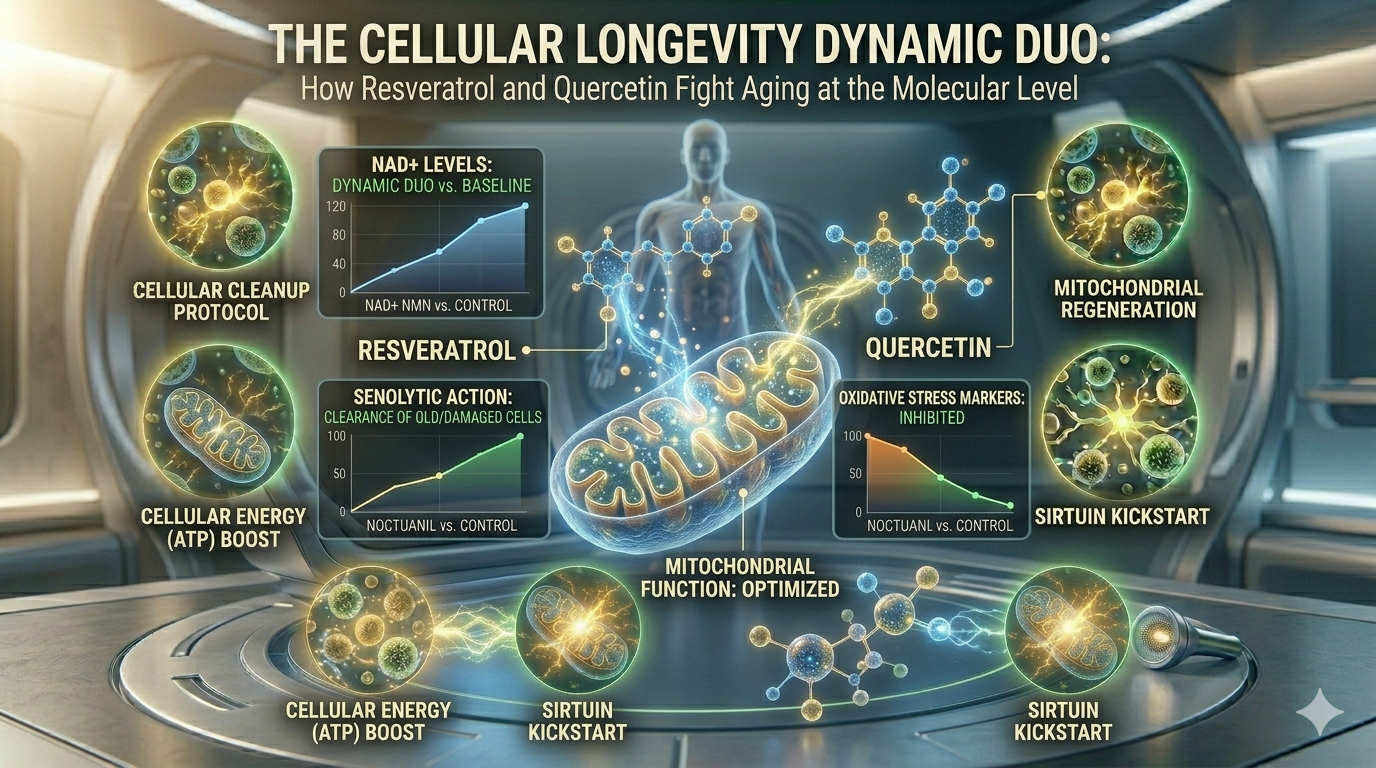
Resveratrol and quercetin represent one of the most scientifically intriguing combinations in this field because they target multiple aging mechanisms simultaneously:
- Sirtuin activation
- Mitochondrial optimization
- Senescent cell management
- Oxidative stress reduction
- Inflammatory control
Resveratrol helps activate the body’s internal longevity pathways, while quercetin assists in clearing dysfunctional cells and enhancing the effectiveness of the entire system.
Together, they create a synergistic framework for healthier aging and improved cellular resilience.
Although no supplement can stop aging entirely, the daily protection of mitochondrial health and cellular integrity may be one of the smartest long-term investments for preserving vitality, cognitive performance, metabolic health, and overall quality of life.